
Your preschooler is gaining independence — and that means new ways to travel safely.
These years are about transitioning from rear-facing to forward-facing seats, learning to recognize traffic rules, and practicing safe habits on sidewalks, buses, and bikes.
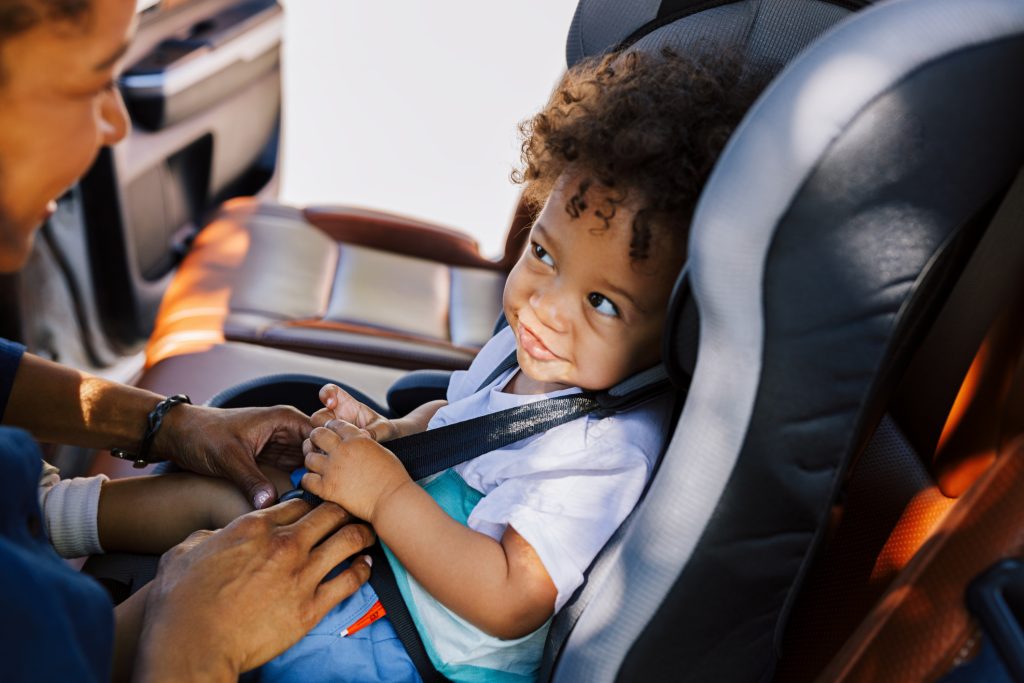
Most children move from a rear-facing seat to a forward-facing car seat around age 2, but it’s safest to keep them rear-facing as long as possible, until they reach their seat’s height or weight limit.
Once they outgrow a forward-facing seat with a harness, they’re ready for a booster seat that positions the seat belt correctly across the chest and hips.
Find a Car Seat Inspection Station (Safe Kids NJ)
Virtual Car Seat Check Video – National Safety Council
How to Install a Forward-Facing Seat
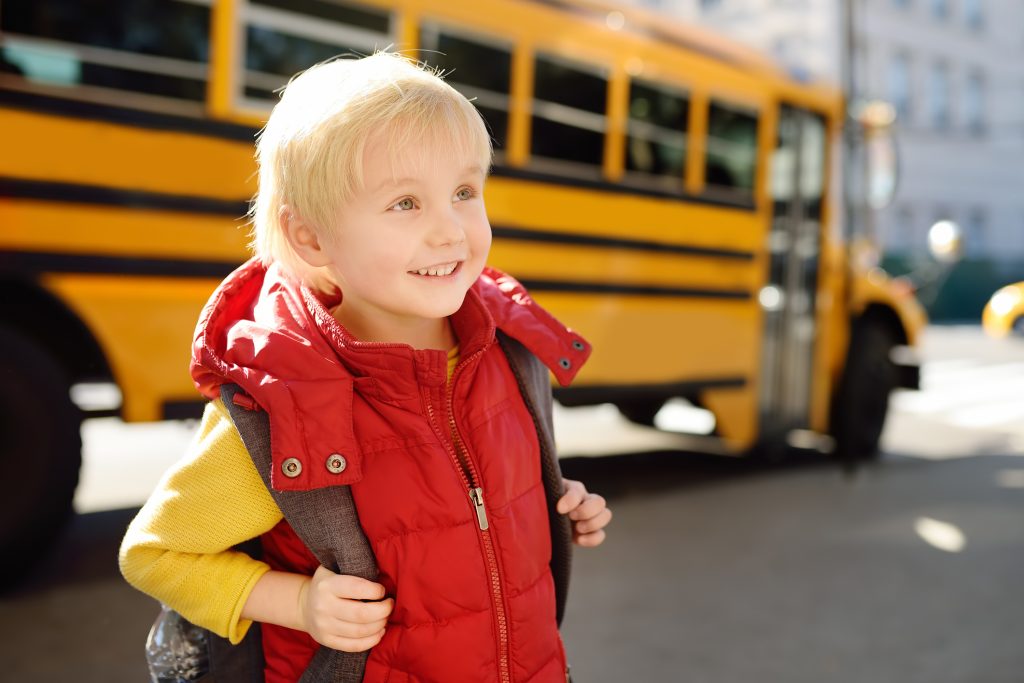
Preschoolers may begin riding buses for school or activities, making this the perfect time to teach safe travel habits.
- Wait for the bus to stop completely before approaching and stand five giant steps back from the curb.
- Use handrails when boarding or exiting, and stay seated facing forward while the bus is moving.
- Never walk behind a bus—if crossing in front, make eye contact with the driver
- In carpools or rideshares, always use a forward-facing car seat or booster, even for short trips.
- When riding trains or light rail, stand behind the yellow line, hold an adult’s hand, and wait for the train to stop fully before boarding or exiting.
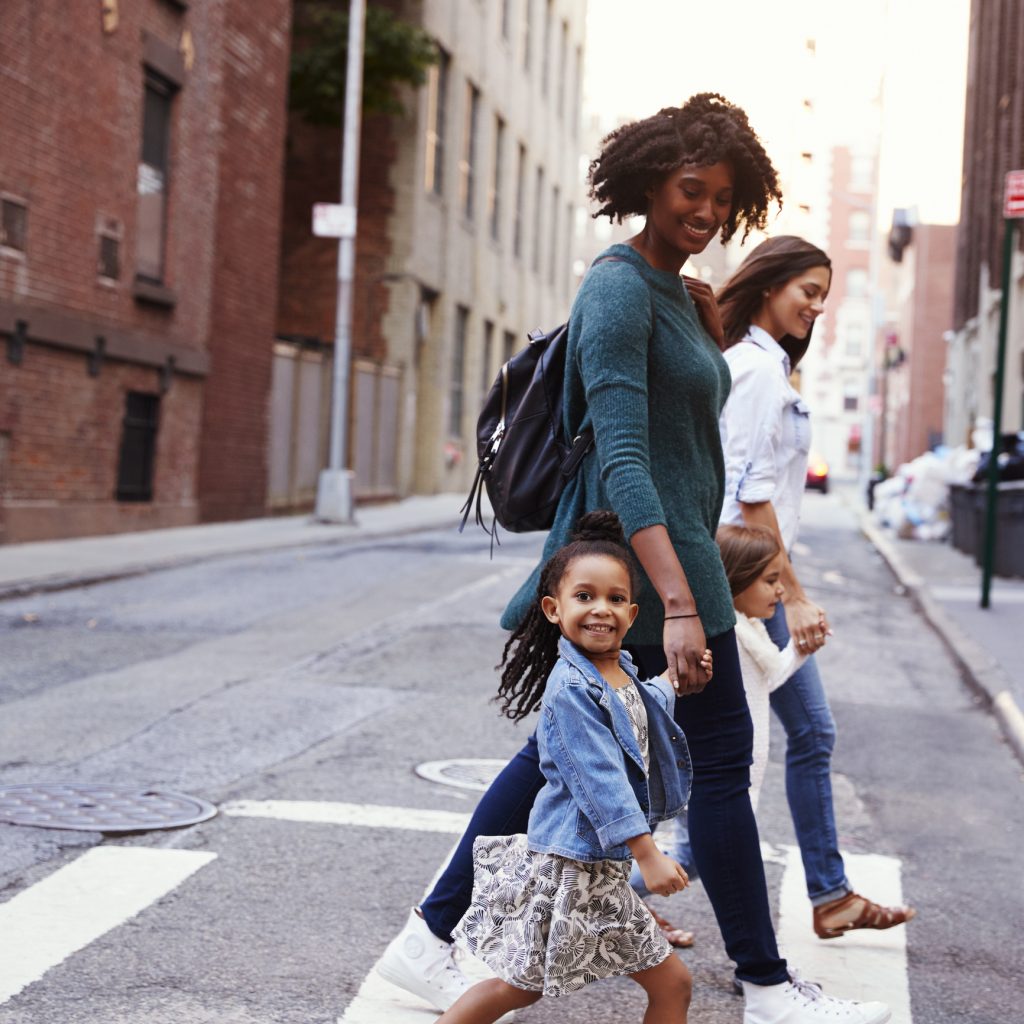
Preschoolers are learning how to move safely near streets, driveways, and tracks. Keep rules short, visual, and consistent.
- Hold hands and cross together at marked crosswalks only.
- Stop, look, and listen before stepping off the curb — left, right, left again.
- Make eye contact with drivers before crossing.
- Stay on sidewalks and never run into the street for a toy or pet.
- Railroad crossings: Only cross where there are marked pedestrian signs or gates, never under or around lowered gates, and always wait until lights stop flashing before crossing.
Walking Safely Tips – Safe Kids Worldwide
Railroad Crossing Safety for Families – Operation Lifesaver NJ
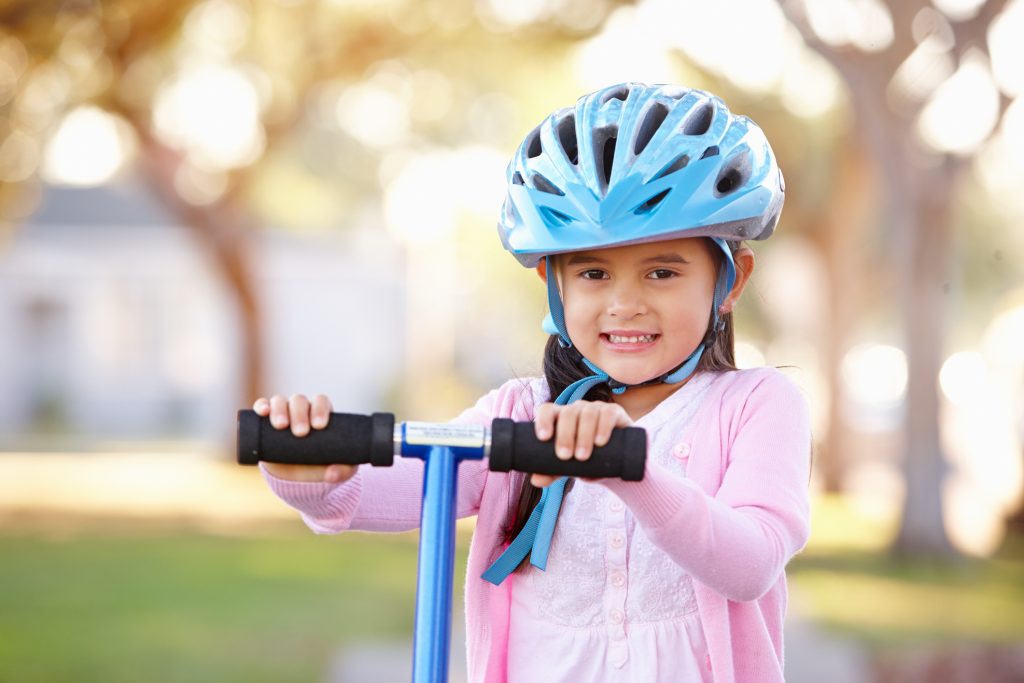
Preschoolers may start on tricycles, balance bikes, scooters, or small training-wheel bikes — it’s the perfect time to make helmets a habit for anything with wheels under their feet.
- Always wear a properly fitted helmet when biking, scootering, or skating — even for short rides on the driveway or sidewalk.
- The helmet should sit level on the head with about two fingers’ space above the eyebrows, and straps forming a snug “V” under each ear.
- Choose bright or reflective clothing so your child is easily seen by drivers and other riders.
- Ride only on sidewalks, driveways, or park paths under adult supervision.
- Parents should model helmet use every time they ride or skate.
Bike Safety Tips – Safe Kids Worldwide
Fitting a bike helmet – NHTSA