
Buckle Up. Every Seat. Every Trip.
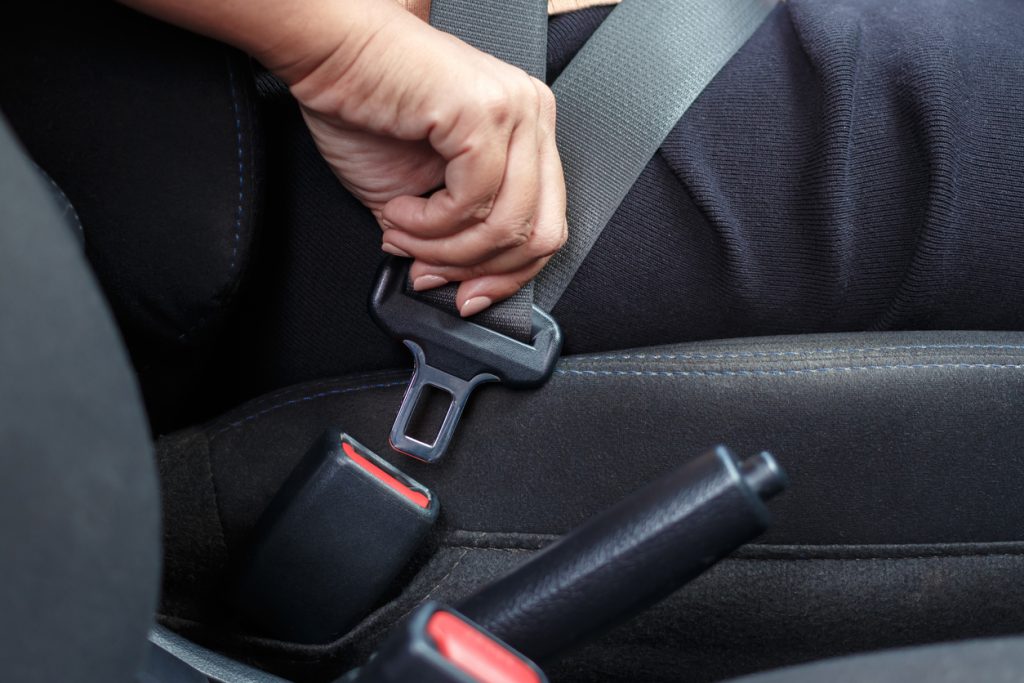
Wearing a seatbelt is the single most effective way to protect yourself and your passengers in a crash. In New Jersey, seatbelt use isn’t optional — it’s the law.
(N.J.S. 39:3-76.2f)
New Jersey’s seatbelt law applies to:
- All passenger vehicles, including vans, pickup trucks, and SUVs, are required to be equipped with seat belts.
- All drivers and front-seat passengers.
- All passengers (including rear seat passengers) who are at least 8 years old or at least 57 inches tall.
- All occupants covered under the law must wear a properly adjusted and fastened seat belt system.
Driver Responsibility
Drivers are responsible for ensuring proper seatbelt use for all passengers under the age of 18.New Jersey’s law is enforced statewide and applies whenever operating a vehicle on a street or highway.
Learn more about New Jersey’s seatbelt laws and safety programs through the New Jersey Division of Highway Traffic Safety (NJDHTS).

A seatbelt only works if it fits correctly.
To ensure proper protection:
- The lap belt should sit low across the hips — not the stomach.
- The shoulder belt should cross the center of the chest and shoulder — never under the arm or behind the back.
- The belt should lie flat without twists.
- Passengers should sit upright with their back against the seat.
If the seatbelt does not fit properly, a booster seat may still be required.
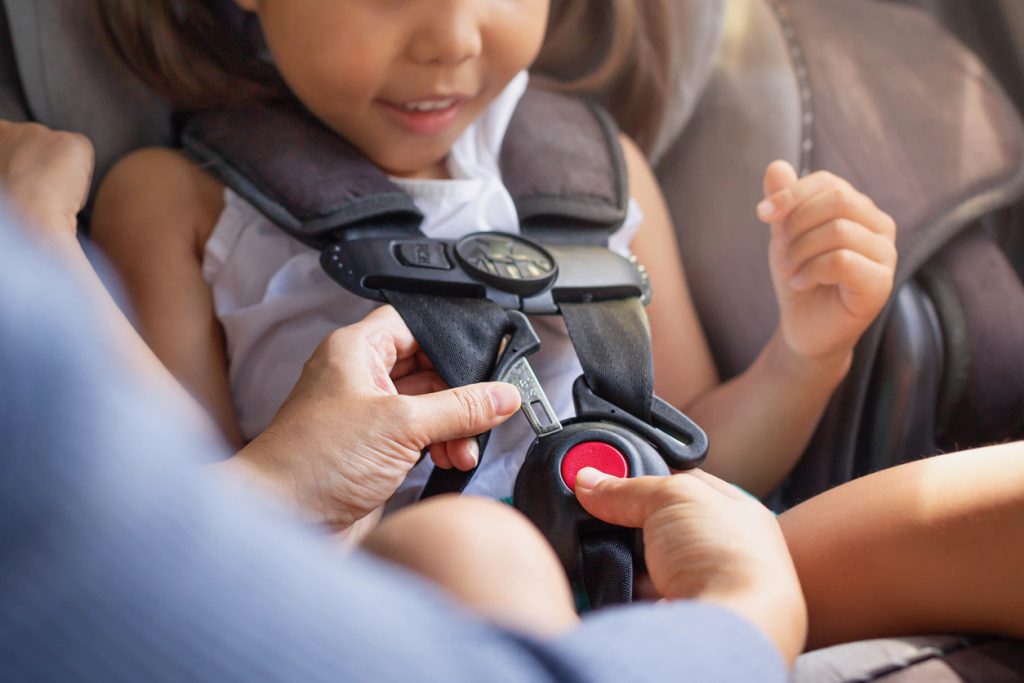
Standard seatbelts are designed for adults. Children require age- and size-appropriate restraints to ensure maximum protection.
Rear-facing seats, forward-facing seats, and booster seats each play an important role in protecting young passengers.
Learn more about child passenger safety laws, proper installation, and inspection stations on our Parents page.